Department

Science Department

The Science Section brings together members of Mensa Serbia involved in research institutions – faculties, institutes, and laboratories – for the purpose of sharing knowledge and information from the world of science.

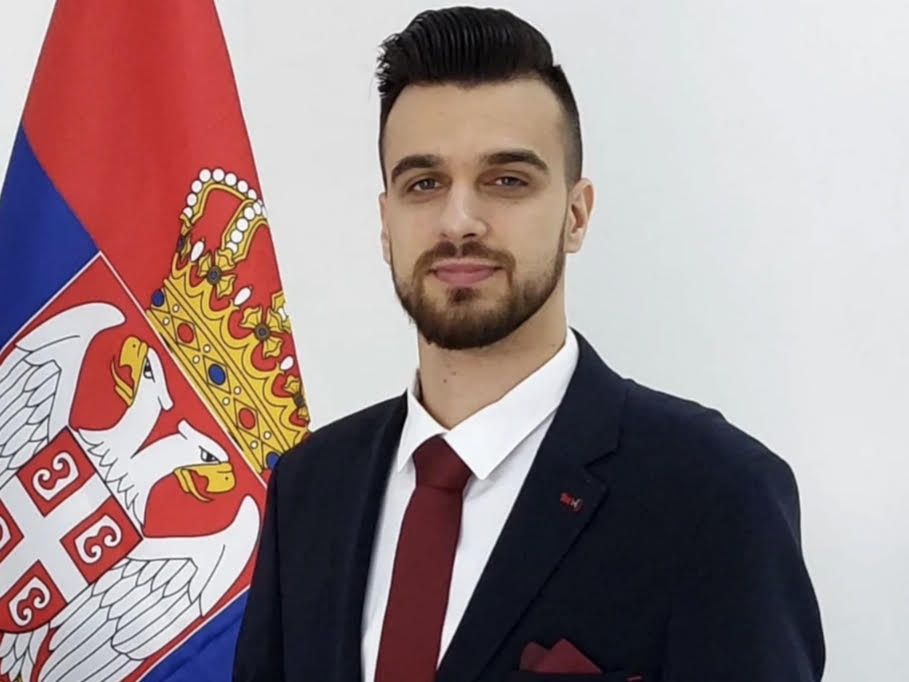
Marko Simić in a business suit in front of the Serbian flag

Marko Simić

Science Department Coordinator

He is a graduate geodetic engineer employed by the Military Geographical Institute in Belgrade, where he develops Python algorithms that automate GIS processes related to the production of topographic maps. He graduated in Geodesy from the Military Academy and completed a master's degree at the University of Belgrade Faculty of Geography. He is currently a doctoral candidate in Geosciences at the same faculty. His principal research interests include GIS, remote sensing and satellite-image classification, particularly Sentinel-2 mission data, which is also the intended subject of his doctoral dissertation. He has authored and co-authored scientific and professional papers in GIS, cartography and remote sensing, focusing on geoprocessing automation, spatial-data modelling and visualisation, and machine-learning and deep-learning methods. He has been a member of Mensa Serbia since 2022 and coordinator of its Science Department since 2025. He sees the department's role as connecting members interested in science, enabling exchanges of knowledge and experience, and supporting activities that promote science.
Read biography
Science Department members

Portrait of Dragana Bečejski-Vujaklija

Dragana Bečejski-Vujaklija

Science Department Member

Prof. Dr Dragana Bečejski-Vujaklija is a graduate engineer of organisational sciences and a retired university professor. Her areas of expertise are business information systems and business intelligence. She graduated from the Faculty of Organisational Sciences in 1976, earned a master's degree from the University of Belgrade in 1983, and received her doctorate from the Faculty of Organisational Sciences in 1992. During her decades-long career, she worked on the design and development of information systems, headed the IT department at the IMS Institute, and taught at the Military Technical Academy and the Faculty of Organisational Sciences. She was also a visiting professor at the University of Jena and the University of Montenegro. She has published more than 100 scientific and professional papers and participated in five research projects and 31 professional projects. She served as Editor-in-Chief of the journal InfoM and was one of the founders of the journal ComSIS. She is a recipient of the “Alumni Hall of Fame” recognition awarded by AIESEC Serbia.
Read biography
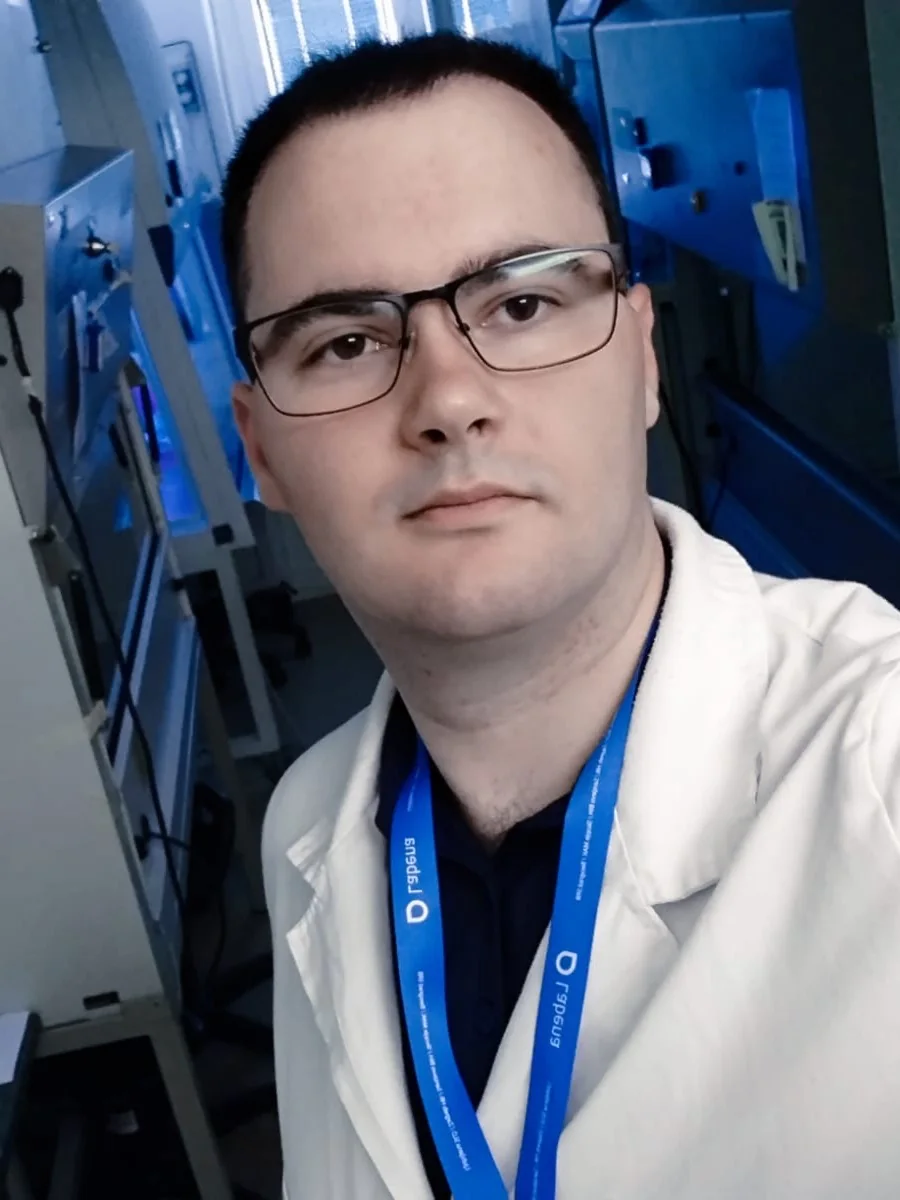
Portrait of Milivoje Konstantinović

Milivoje Konstantinović

Science Department Member

Milivoje Konstantinović is a molecular biologist and physiologist at the Institute for Biological Research “Siniša Stanković” – National Institute of the Republic of Serbia, University of Belgrade, where he contributes to several research projects. He completed his undergraduate studies at the Faculty of Biology, University of Belgrade, in the “Molecular Biology and Physiology” module, and subsequently earned a master's degree in molecular biology and physiology at the same faculty, in the “Human Molecular Biology” module. He completed his master's thesis at the Institute for Biological Research “Siniša Stanković”. For this work, he received the Goran Ljubijankić Foundation Award for the best master's thesis in molecular biology and the Ivan Đaja Foundation Award for the best master's thesis in physiology. He is currently a PhD student at the Faculty of Biology, University of Belgrade, enrolled in the “Molecular Biology” study programme and the “Molecular Biomedicine” module. His research primarily focuses on metabolic disorders, particularly the molecular and cellular mechanisms involved in the onset and progression of obesity and insulin resistance, as well as their systemic consequences. During his studies, he actively contributed to the promotion and popularisation of science through volunteer work, the organisation and delivery of public lectures and science workshops, and other activities designed to make science more accessible to the general public. Beyond science, he pursues a range of other interests: philosophy (especially epistemology and logic), debating, the visual arts (drawing and painting), writing, calligraphy, chess, sport shooting and collecting.
Read biography
Tasks of the Scientific Department
Involvement in the work